
Research and Devlopment
Go-tech Project
Our duty as sculptors is to express and realize the shape our customers desire under the conditions they require.
To put this into practice, we must not be limited to traditional materials and manufacturing methods, but must continue to study and refine our skills to adapt to a world that is constantly evolving and changing, using new materials and new manufacturing methods.
In order to set the next standard in our manufacturing methods and to be able to meet the uncharted demands of all our customers, we believe it is necessary to constantly take on new challenges.
Here we would like to introduce some of the challenges we are taking on.
National Project Research and Development2023~2025(Reiwa5~Reiwa7)
Note: This contents include Japanese.
- Development of 3D printer molding powder materials that realize environmentally friendly, flame-retardant, lightweight, and low-cost wall decorative building materials
- Research and development support program for growth-oriented small and medium-sized enterprises
Go-Tech business (former: Support Industry (Sapoin)) -
- Objective
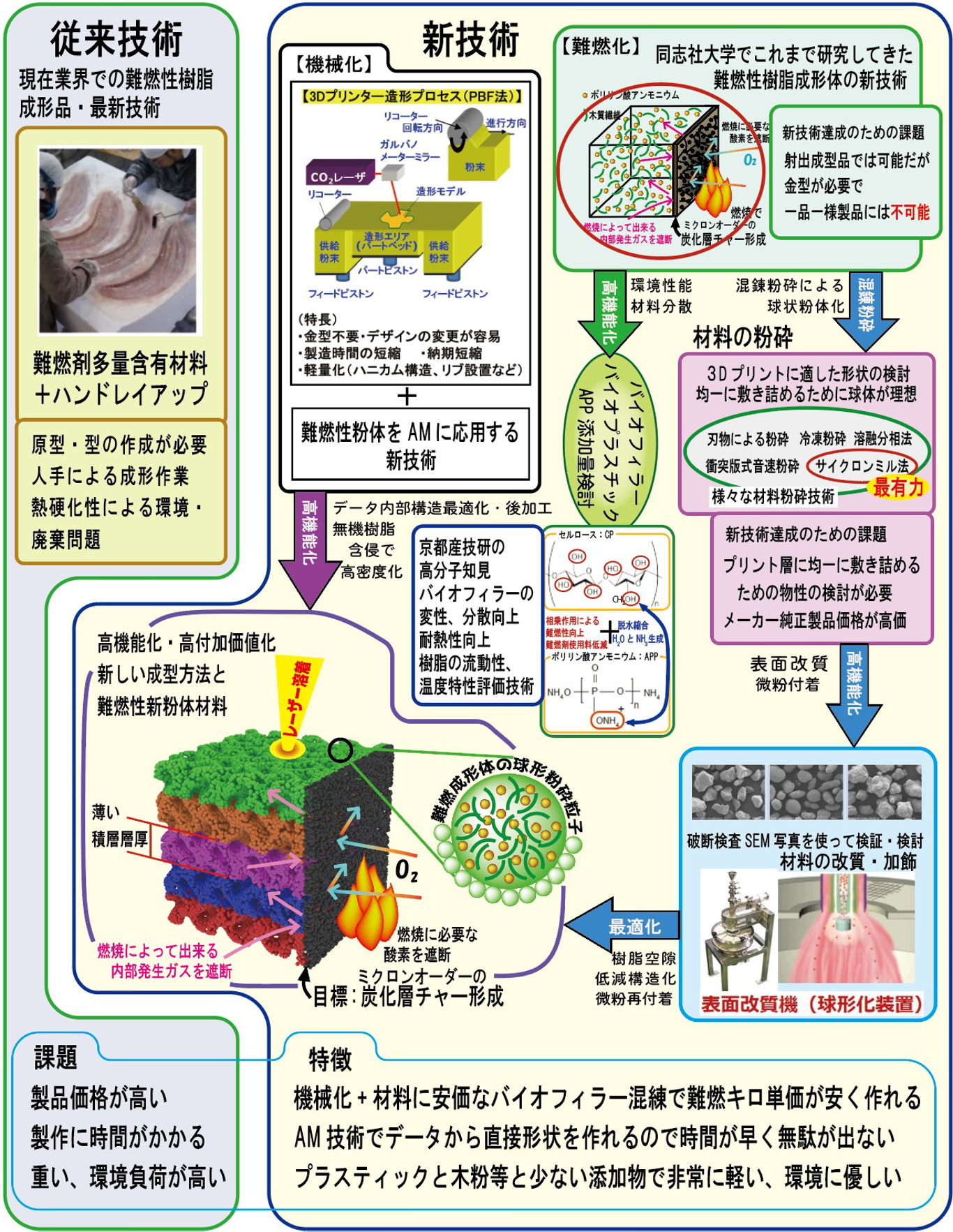
- In the powder bed fusion method, which is currently the most productive additive manufacturing method, flame retardant properties are achieved by using 3D printing materials such as polypropylene, polyamide 11, and polylactic acid resin mixed and ground with flame retardants and wood additives.
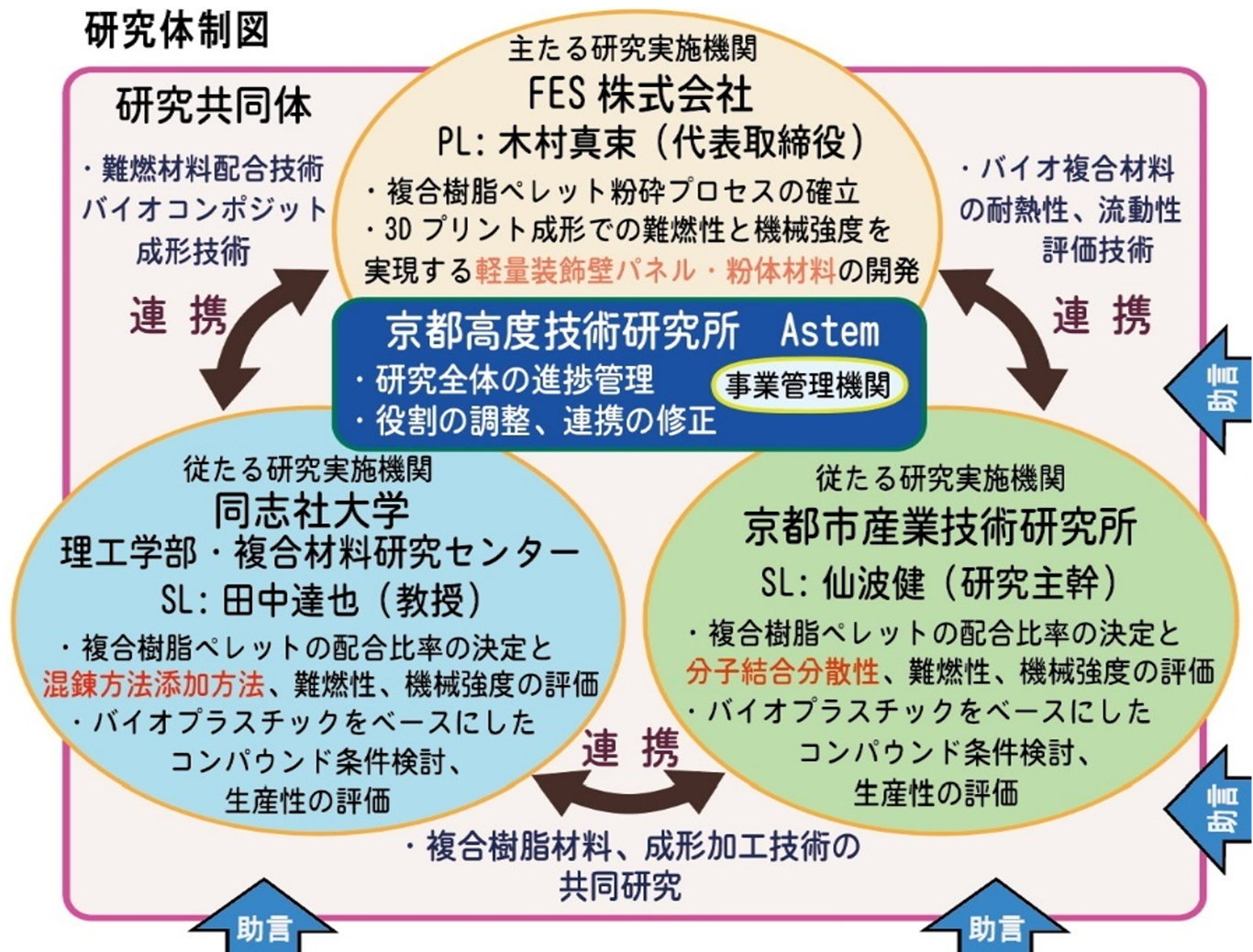
Conduct research and development into the materials and manufacturing methods for these objects, and accelerate the BtoC sales process for highly designed, lightweight three-dimensional objects and their materials. - Specific research and development content
-
-
-
- Publication of a paper on the contents of this research and development
- 4DFF 2025 10.23~24
-
- Research on SLS 3D-print molding for fire retardant decorative building materials
Mazuka Kimura①, Hiroaki Ito②, Takeshi Semba②, Yuzo Okudaira③, Tatsuya Tanaka③
①FES Inc., ②Kyoto Municipal Institute of Industrial Technology and Culture, ③Doshisha University
-
- Abstract
- This research concerns 3D printed molding with enhanced fire retardancy by utilizing the carbonization of cellulose. The molding method used is SLS (Selective Laser Sintering Method), which melts and recrystallizes resin powder using laser irradiation; PP (polypropylene) was used as the resin. A 3D printed molded samples containing over 30% cellulose in weight ratio achieved V-0 in the UL94 combustion test, and the mixing rate of the conventional flame retardant was significantly reduced to 1/3 of the previous level. It is expected to be used in public facilities where fire retardancy is required.
- Research on SLS 3D-print molding for fire retardant decorative building materials
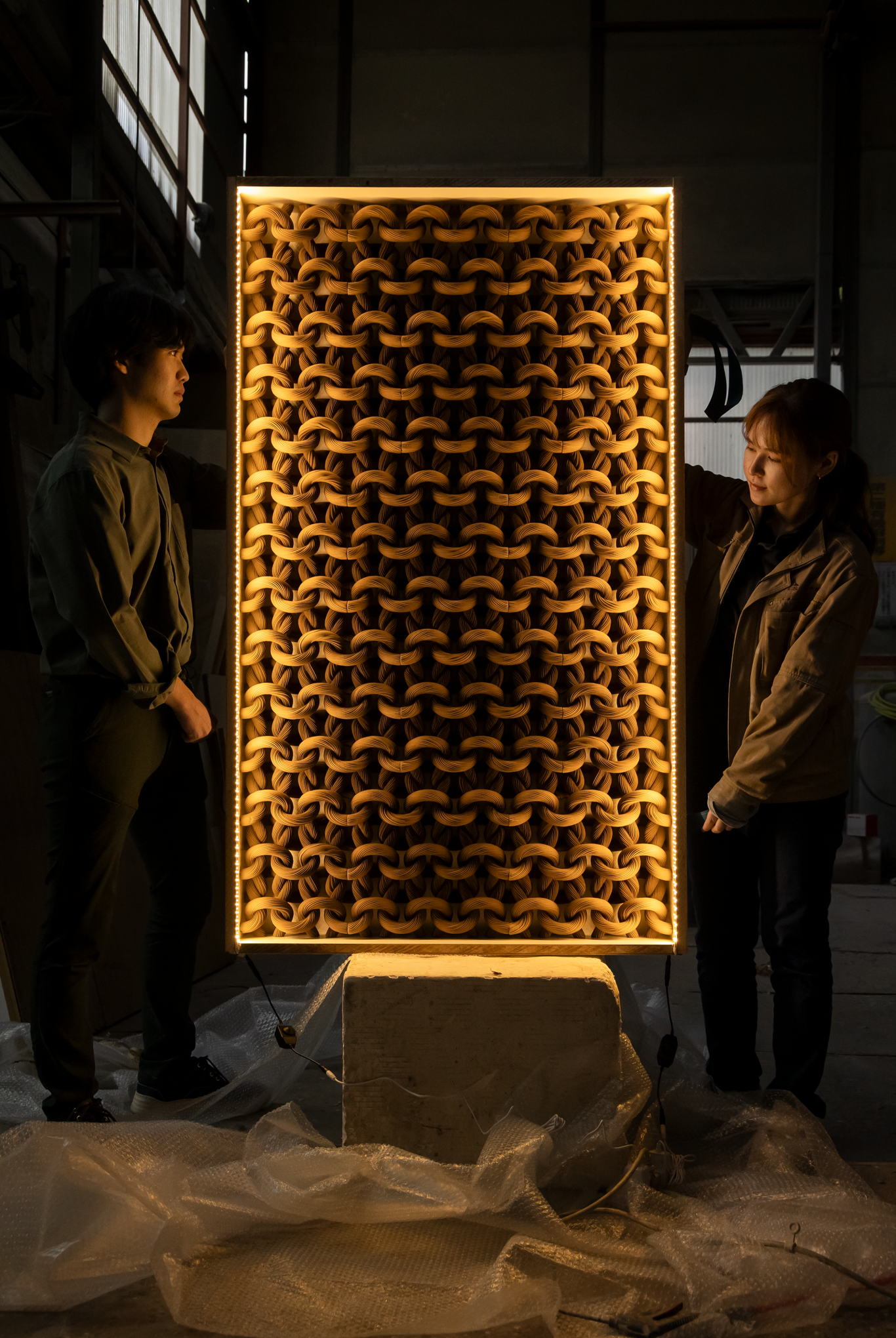
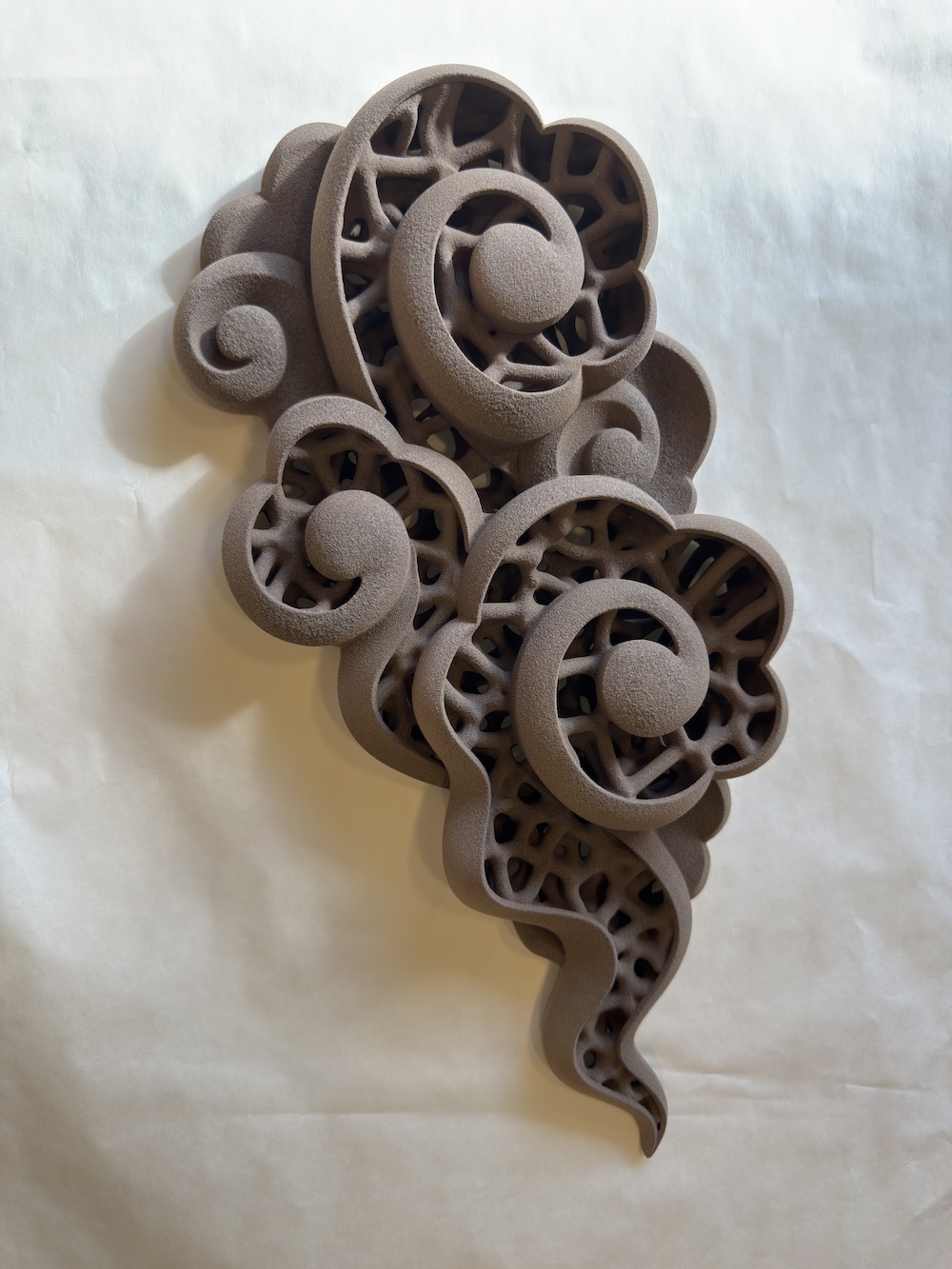
The wall model exhibited at FormNext 2025 is both a work of art and a product sample with commercial applications in mind. Aimed at non-load-bearing wall surfaces where design is the primary focus, such as the entrances and ceiling decorations of luxury hotels and the interiors of shops, we pursued a shape unique to additive manufacturing that removes the constraints of conventional molding methods.
This work is the result of the practice of FES Inc. representative Mazuka Kimura, who has continued his artistic activities since graduating from university, and his ongoing involvement in the creation of works by contemporary sculptor.
This product, which incorporates precision modeling using selective laser sintering (SLS), is positioned as a “touchstone” that will mark an important step in the transition from the display and three-dimensional modeling industries, which have previously relied primarily on thermosetting resins (FRP), to thermoplastic resins, and toward environmentally friendly manufacturing.
The most notable feature of the material design is that the main component is cellulose, and its content exceeds that of the second component, polypropylene. This formulation, which is primarily composed of bio-derived ingredients, has the potential to be an effective solution in an era where carbon neutrality is required. Furthermore, this material has a flame retardancy rating of V-0 according to the UL94 standard, making it particularly noteworthy in terms of safety as a decorative material. In terms of cost, a major advantage is that it uses relatively inexpensive cellulose as its main component while minimizing the amount of flame retardant used.
This research is being carried out by FES inc. as a joint industry-academia project with Doshisha University and the Kyoto Municipal Industrial Technology Research Institute. Mazuka Kimura, representative of FES Inc., is a founding member of the artist group “Kyupikyupi,” and currently serves as a bridge to the industry side, using the knowledge he has gained in the field of three-dimensional object manufacturing. Additionally, as the chairman of the Kansai Art and Design Association, he is working to form a cross-industry network and promote new materials and new construction methods.
Acknowledgments
This research was carried out with the support of the Ministry of Economy, Trade and Industry’s Research and Development Support Project for Growth-Oriented Small and Medium-Sized Enterprises, JPJ005698 (FY2023-FY2025).
We would like to express our gratitude to all those involved.
TATALAB
Flammable Wood, creates Flame Resistance
TATALAB is a flame-retardant 3D-printed wood-based panel developed through research and development conducted by FES Inc. under the Go-Tech Program.
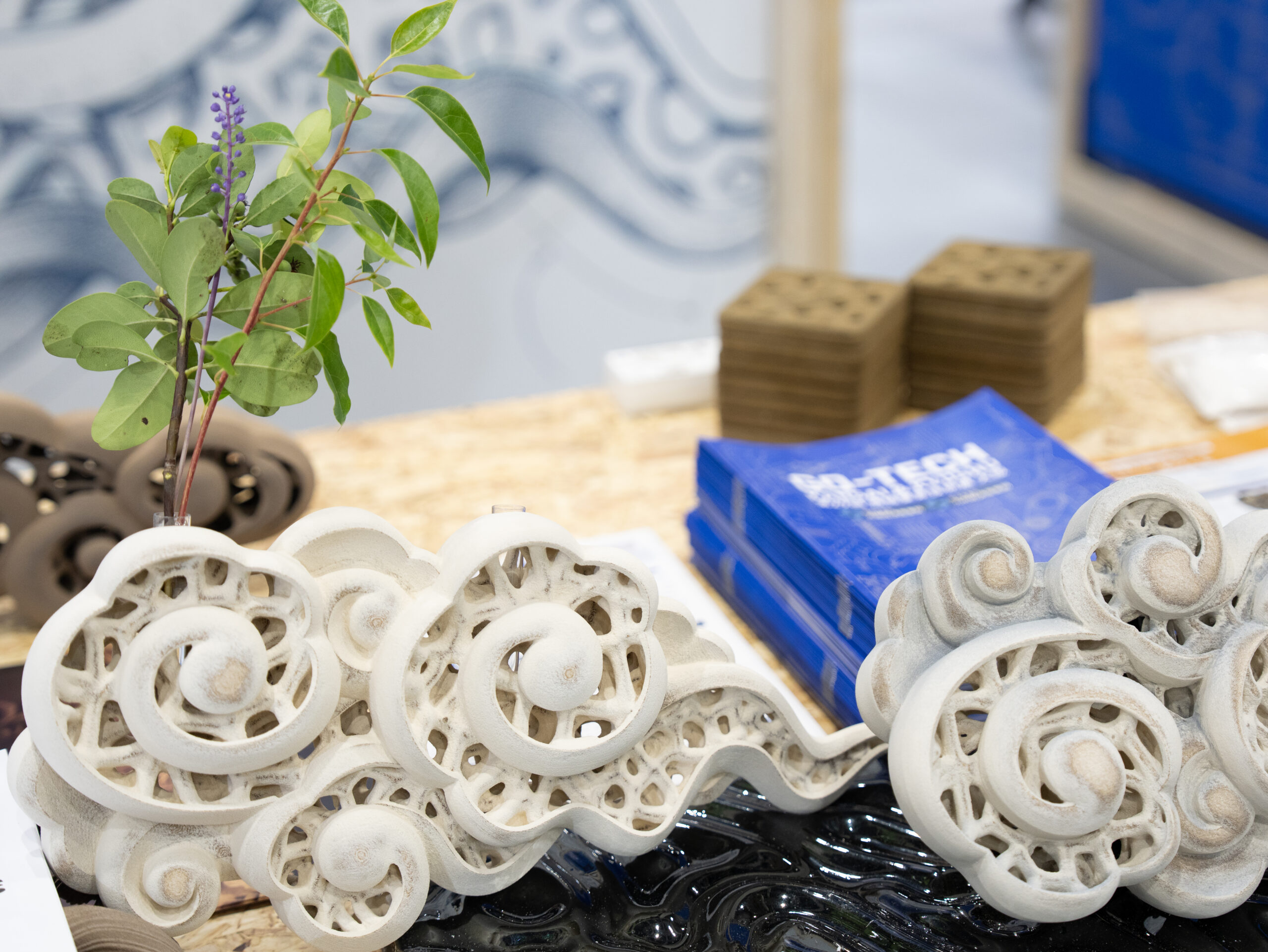
- The Texture of Wood. A New Dimension.
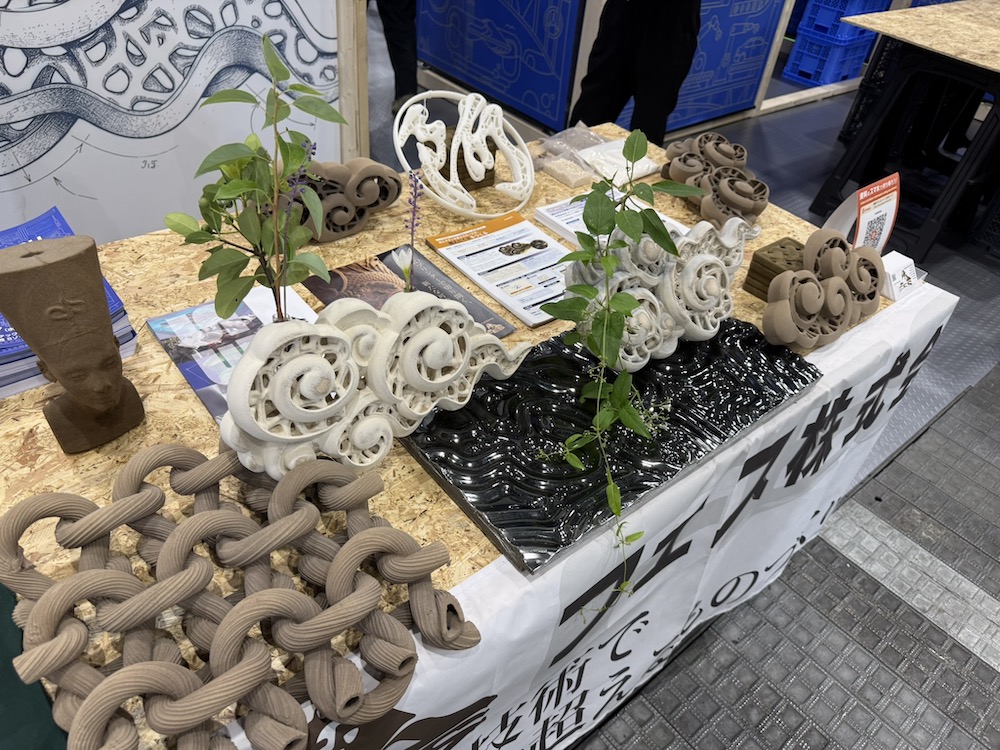
- Overlapping curves, intricately layered openwork patterns, and three-dimensional forms composed of interlocking rings.
Using Selective Laser Sintering (SLS), TATALAB transforms powder containing wood-based cellulose into solid structures by selectively fusing it with a laser. This technology makes it possible to create complex forms that are difficult to achieve with conventional molds.
Individual panels can be combined to create expansive wall surfaces, decorative ceilings, and monumental installations. Because designs can be brought to life without the need for molds or formwork, TATALAB offers the flexibility to realize one-of-a-kind creations and customized designs tailored to individual spaces.
By eliminating the need to produce master patterns and sacrificial molds, TATALAB also offers a new approach to fabrication that avoids the waste associated with their production. - Turning the Properties of Wood-Based Cellulose into Flame Retardancy.
- Using a component of wood that is naturally combustible to achieve flame retardancy. This is the material design philosophy behind TATALAB.
Through industry-academia-public collaboration with Doshisha University and the Kyoto Municipal Institute of Industrial Technology and Culture, TATALAB harnesses the protective effect of the char layer formed when cellulose is exposed to heat. This layer acts as a thermal barrier, helping to inhibit further combustion.
Combustion testing has confirmed flame-retardant performance at the UL 94 V-0 level. In addition, the powder material achieves a biomass content of up to 80%. - 巡環 / Meguri — Lightness in Harmony with Circularity
常環 / Tokiwa — Enduring Strength - TATALAB offers two grades to meet different application needs.
MEGURI prioritizes lightweight performance and circularity. Designed with post-use collection, regrinding, and reuse in mind, it is ideal for temporary applications such as events, exhibitions, and decorative installations.
TOKIWA is designed for permanent interior applications and architectural fixtures. Through vacuum impregnation, resin is introduced into the material’s internal pores, achieving a flexural strength of 28㎫ while maintaining its flame-retardant properties. - Beyond Material Innovation, Into the World of Spatial Design.
- The name TATALAB combines Tatara, a traditional Japanese technique associated with powder processing, and LAB, symbolizing research and innovation.
At FES Inc., we provide an integrated process encompassing everything from powder material production and 3D fabrication to vacuum impregnation. By translating technologies developed through research and innovation into creative forms, we bring new expressions and possibilities to architectural and interior spaces.
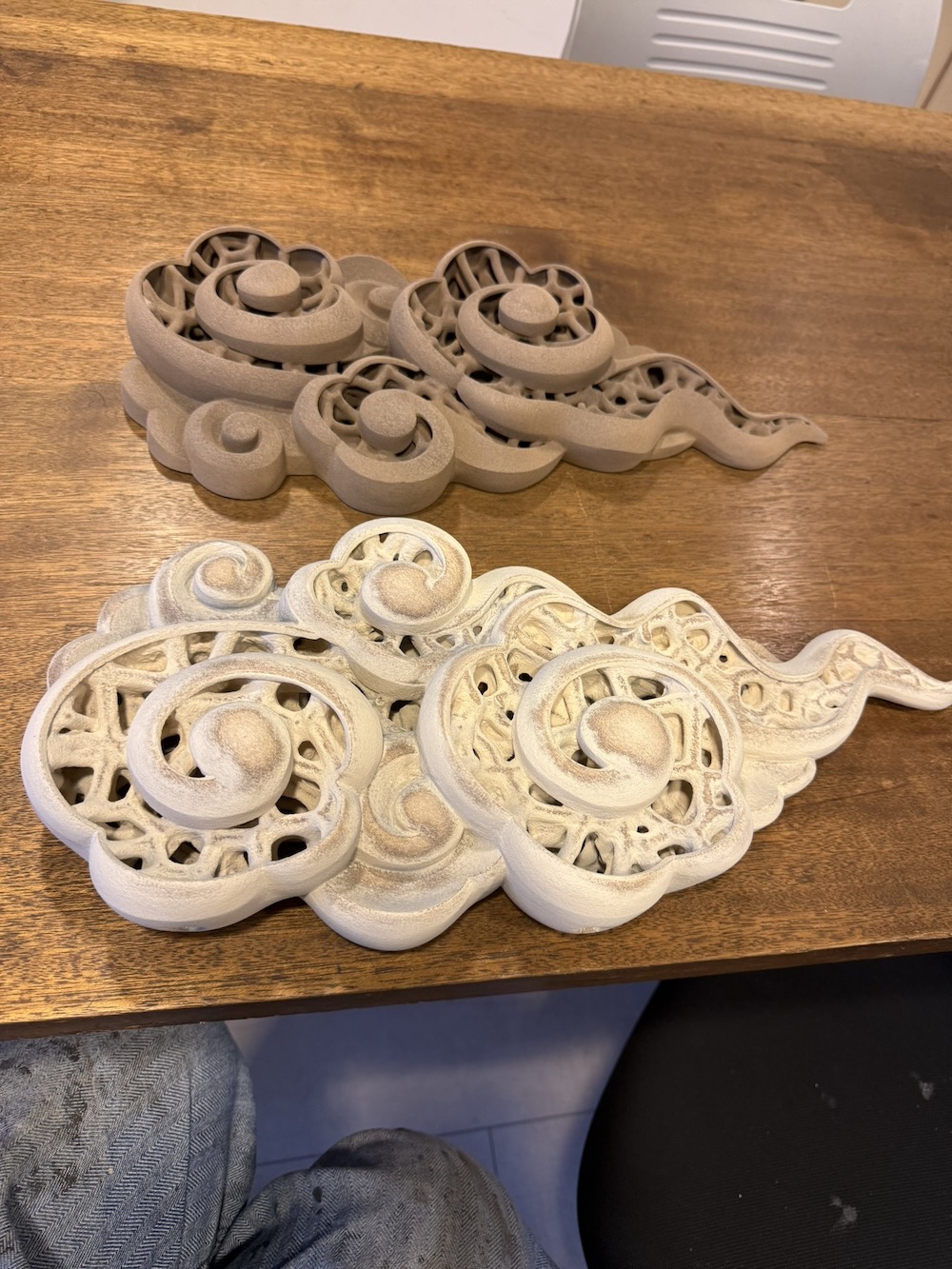
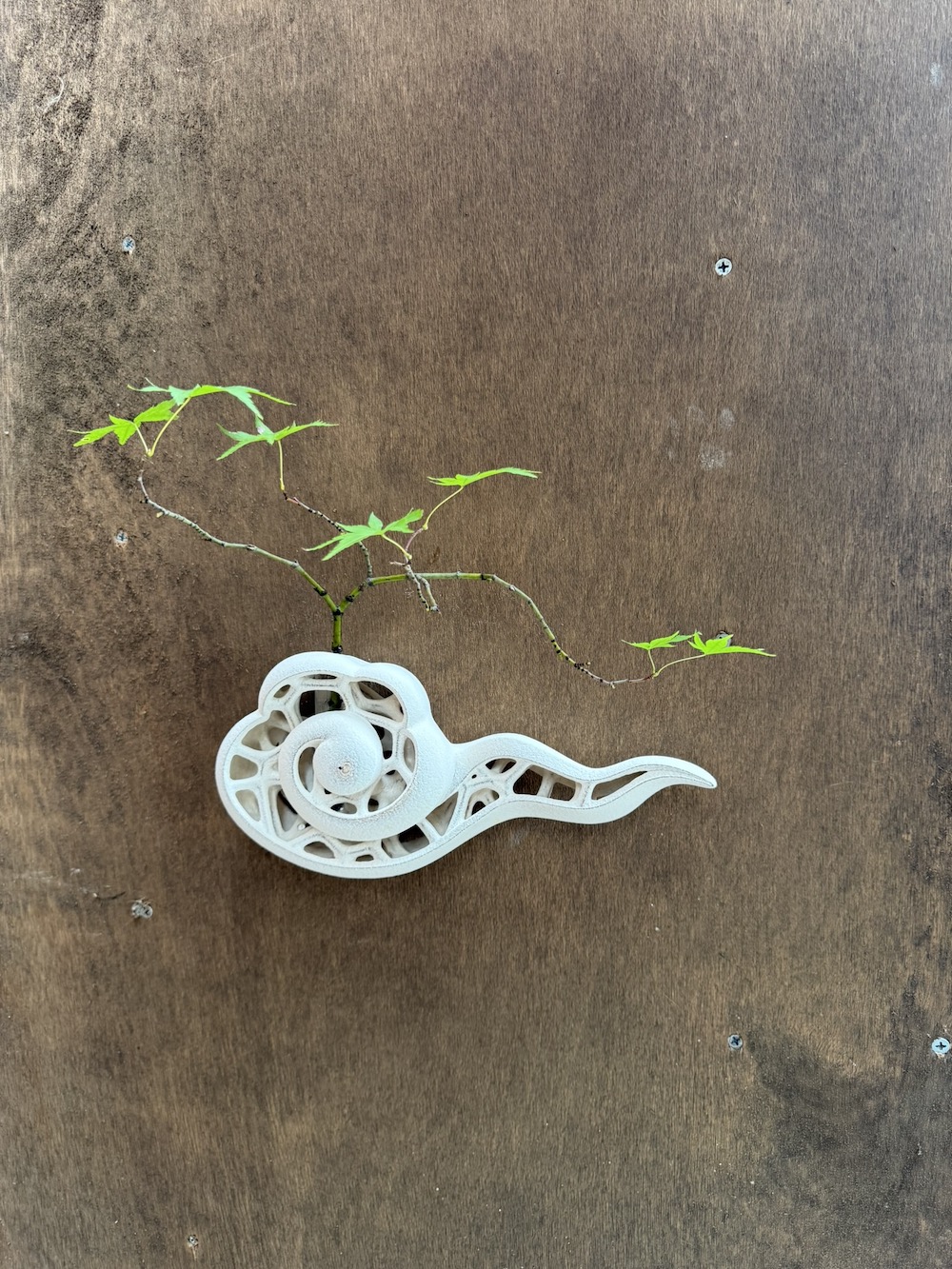
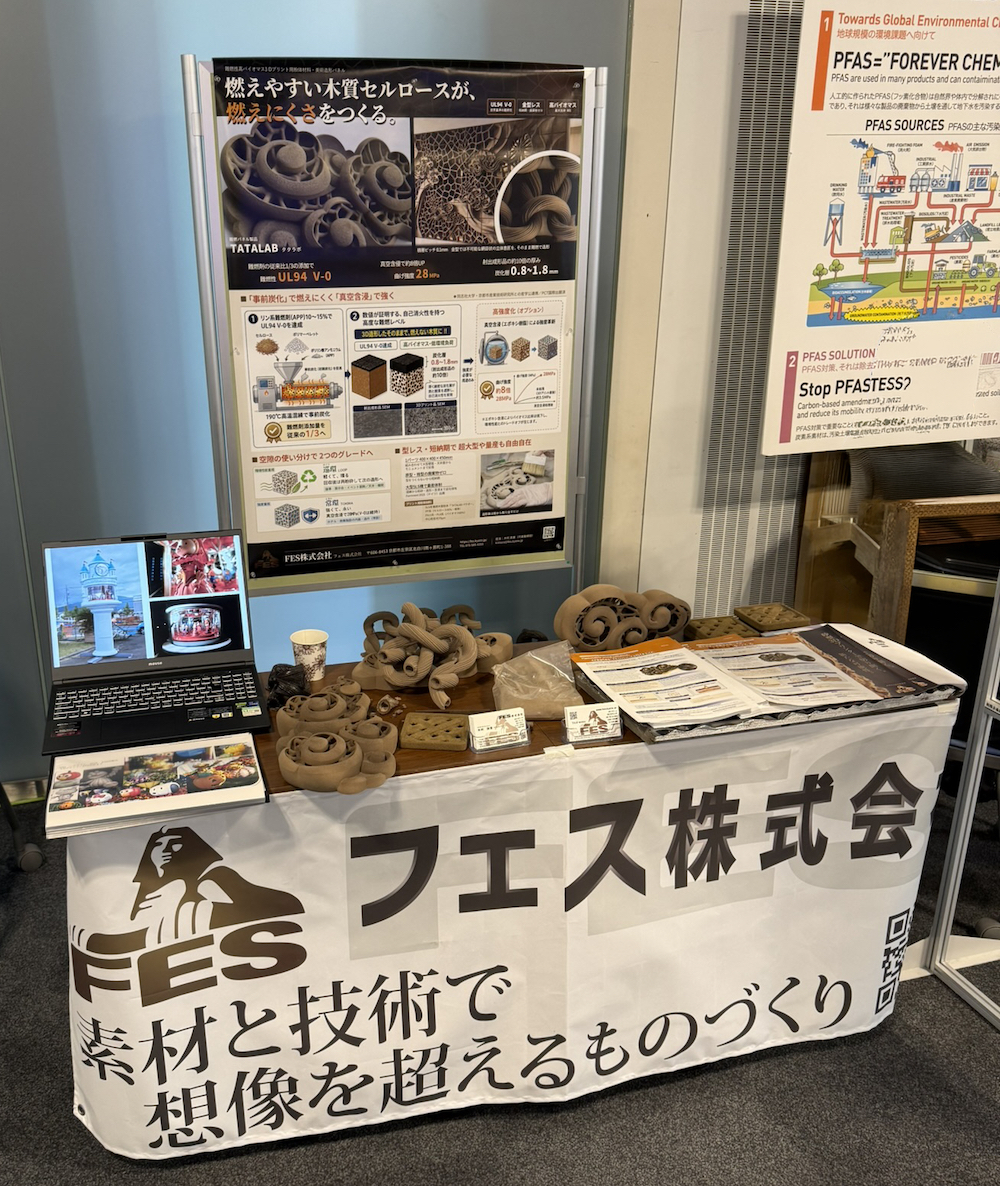
At the 1st Polymer Additive, Composite, and Manufacturing Asia (PACMA), held from September 9 to 11, 2026, at the 60th Anniversary Hall of Kyoto Institute of Technology, and the Mechanical Components & Materials Technology Expo (M-Tech), held from October 7 to 9, 2026, at INTEX Osaka, FES Inc. showcased decorative panels and three-dimensional samples created with TATALAB. Through these exhibits, visitors had the opportunity to experience firsthand the unique material textures and intricate designs made possible by TATALAB.
We would like to extend our sincere thanks to everyone who visited our booths and took an interest in our work.
- Exhibition Brochure (PDF)
- English Version
- Japanese Version
- METI Kansai Bureau – Kansai Tech to Biz Network: Manufacturing Technology Profile (PDF)
- Company Brochure
Please feel free to contact us to discuss custom decorative panels, applications for exhibitions and spatial design, or the adoption of TATALAB Powder for SLS 3D printing.
Inquire About TATALAB∗The performance figures presented are based on evaluations conducted under specified test conditions. Suitability for architectural applications is subject to individual assessment of applicable certifications, installation requirements, and other relevant conditions.